If You Want to Deify Your Music Teacher, Make Sure You Have Two of Them
By Thomas Wolf
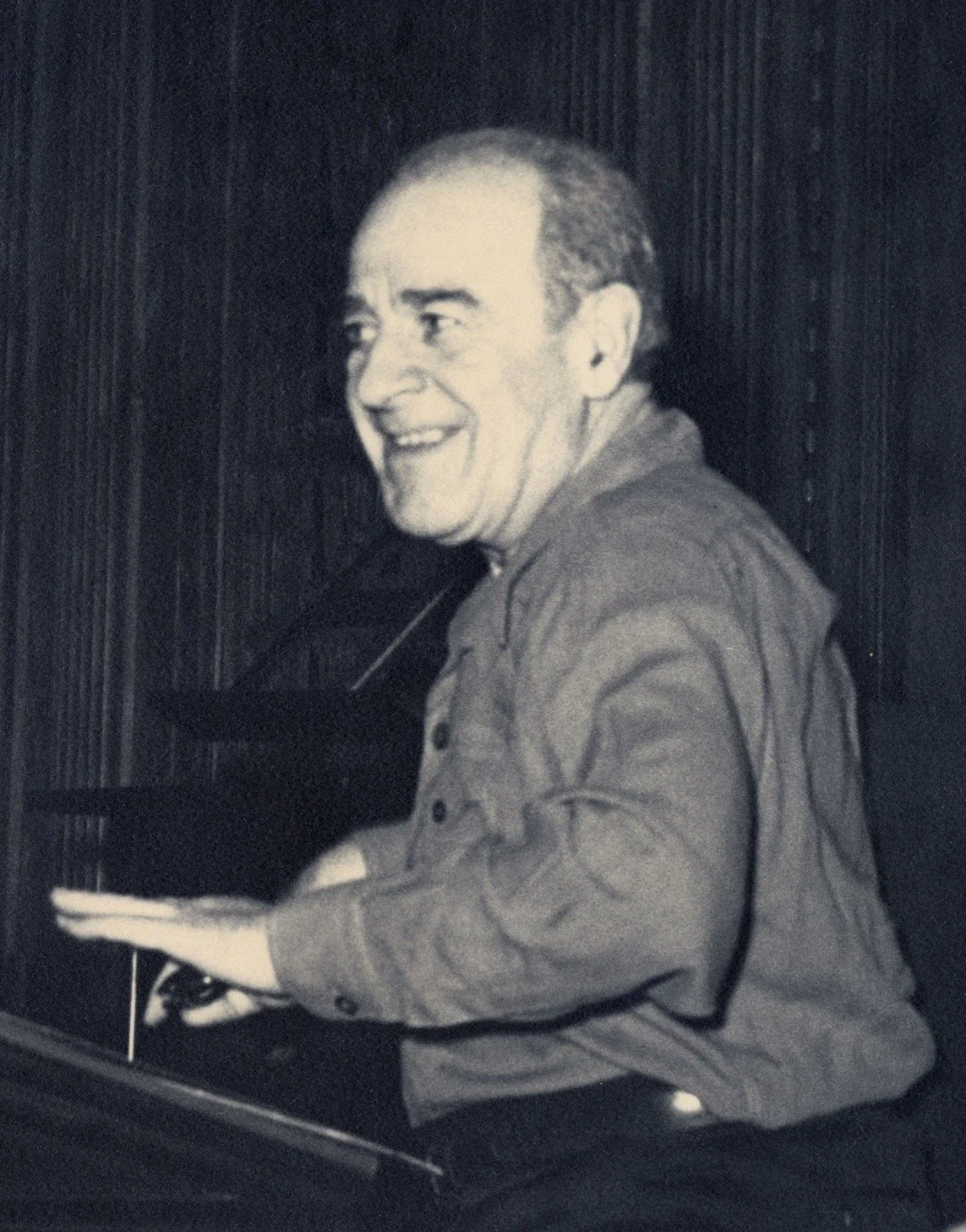
Oboist Marcel Tabuteau conducting a woodwind class at the Curtis Institute of Music. His God-like reputation was so immense that even non-woodwind players like pianists would come to his class. (Photo source: Courtesy Curtis Institute of Music archive.)
PIANIST JONATHAN BISS ARGUED [i] in a recent article that the tendency of music students to treat their teachers as Gods is a terrible thing. His examples are terrifying. “Stories of… humiliation came in quickly: a world-renowned pianist screaming at a student to stop after three notes; a violin teacher calling a student a racial slur; a legendary violinist advising a student to quit music; a venerated teacher comparing a student performance to bird excrement.” He even brings up sexual abuse as a result of treating teachers as Gods.
While I am sure one can cherry-pick examples of cruelty in any profession or work situation where individuals abuse their power, my own experience deviates significantly from what Biss describes. I have known countless music students who have gone on to distinguished careers who have described their teachers in God-like terms and continue to do so long after their student days. Often these descriptions are laced with affection and continued adulation.
One can point to many of these teachers whose results have been extraordinary. Take, for example, Marcel Tabuteau—the oboe teacher at the Curtis Institute of Music in Philadelphia, the same institution that Biss attended.
Many of Tabuteau’s students went on to occupy the most prestigious positions in the field. So influential was Tabuteau that students of other instruments (including even pianists) voluntarily attended his classes.
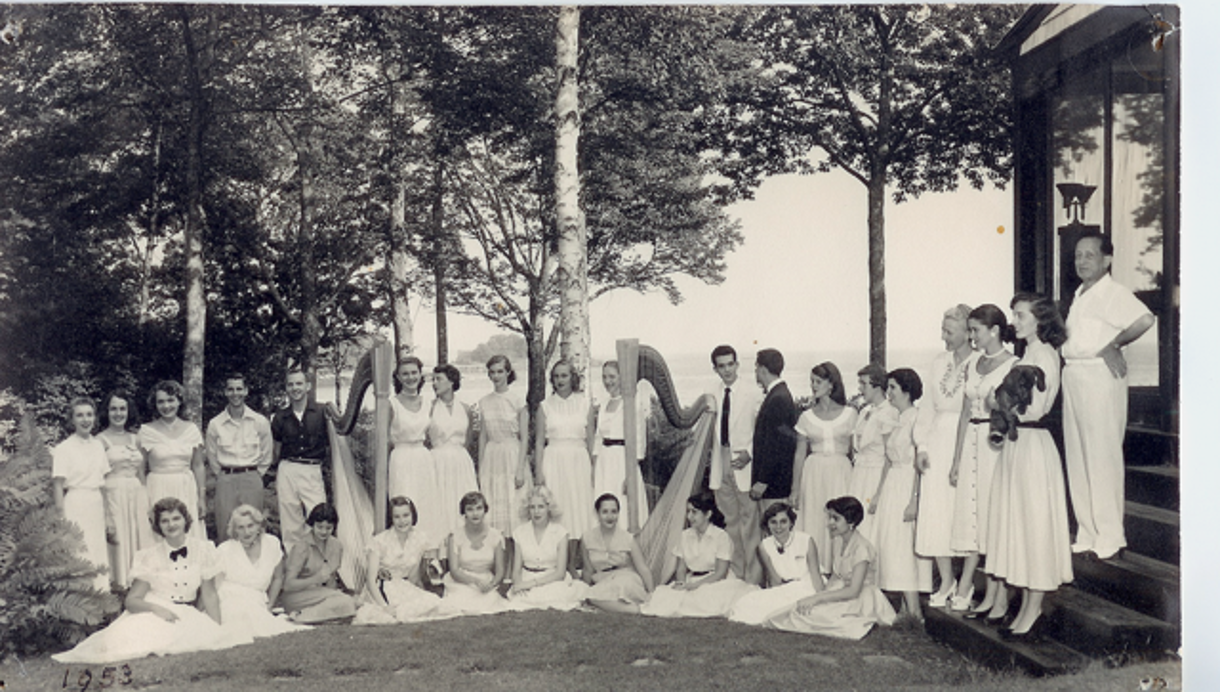
Carlos Salzedo (right) with his 1953 class at his summer harp school in Camden, Maine. Considered God-like by his students, his impact on the harp and harpists is legendary. (Photo source: Alyce Rideout.)
Another teacher at the Curtis Institute who was treated like a God was harpist Carlos Salzedo, whose influence on generations of harpists is legendary, given their ultimate career success. It is true that the two pedagogues, Tabuteau and Salzedo, are from a past generation, but I have chosen them intentionally to demonstrate that this form of adulation did no long-term harm to their students. Indeed, the career accomplishments of their students as a group far outshine the results of students of other pedagogues on these instruments. Students of each whom I have known personally were both lavish in their praise and had few complaints about interpersonal relationships.
One could easily point to music teachers active today who are treated as God-like by their students without seeming ill effects.
On the other hand, there are two cautions that must be kept in mind as one considers the questions that Biss raises. The first has to do with the danger he cites of students developing a closed mind, musically speaking, and becoming poor imitators of their teachers. There is a tendency to assume that what the God-like teacher has imparted is the ultimate musical truth. Music, as Biss points out, is more complex and nuanced. He writes:
“If we want musicians who engage deeply with the music they play, who approach it with imagination and courage and marry instinct to insight, then we should elevate teachers who acknowledge their own fallibility and who help their students learn to think and listen critically. If we want musicians who reduce their work to a set of rules to be followed, we should elevate teachers who think they can do no wrong and demand that their students think the same.”
But how can a music student develop such high-level imagination and insight when he or she is still learning the craft? Here, I think, there is a simple solution. Study with more than one great teacher—with each bringing a different perspective to the instrument.
I, along with many other flutists of my generation, for example, had this experience. Many flutists at the Curtis Institute of Music studied with the legendary American flutist, William Kincaid. Of these, several then went on to study with the iconic French flutist, Marcel Moyse, (one of the founders of the Marlboro Music Festival which Biss co-directs). The approach of these “Gods” to the instrument could not have been more different. The result was that students forged their own way and many became instrumental leaders of their generation. Similarly, my brother, Andrew Wolf who was a piano student at Curtis, studied both with Rudolf Serkin and Mieczysław Horszowski, and the contrast in approach allowed him to be worshipful of these two “Gods” while forging his own unique style of playing.
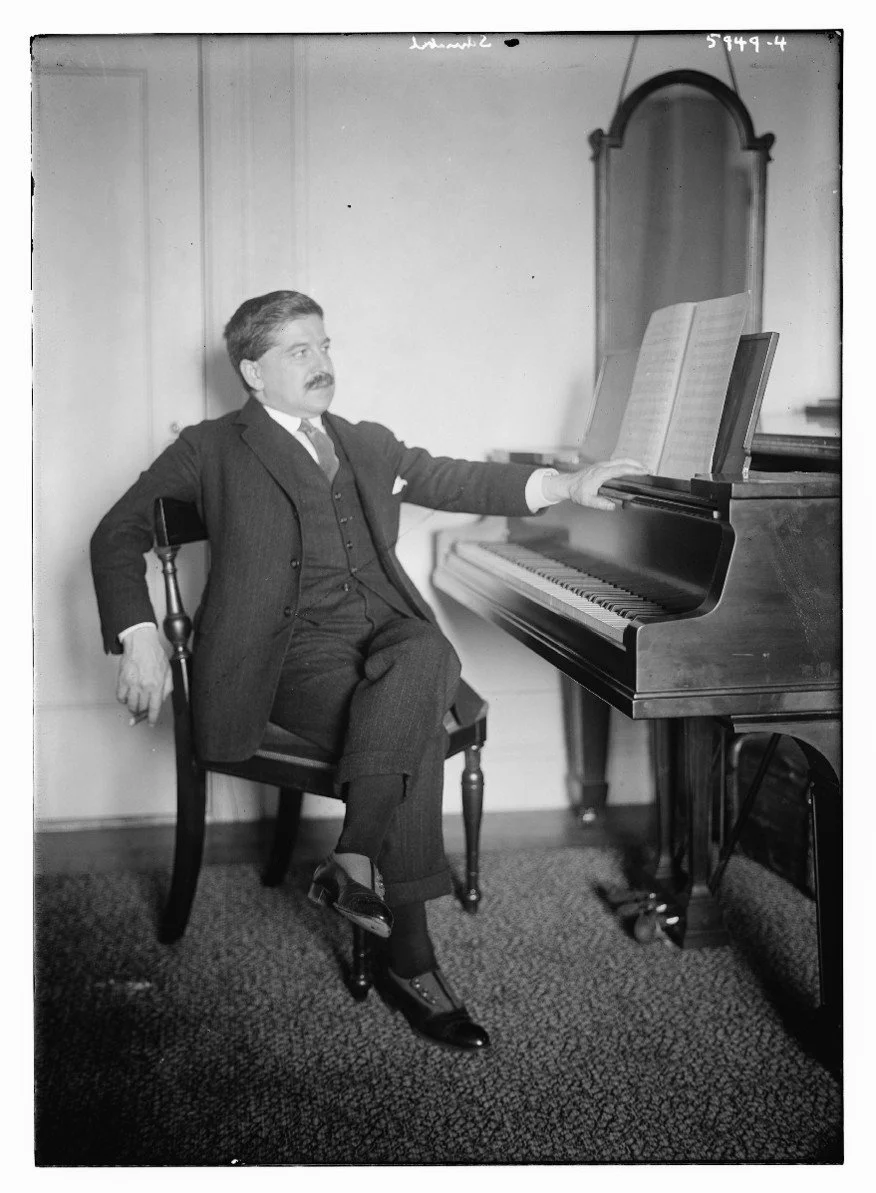
Artur Schnabel, my Uncle Boris Goldovsky’s teacher, whose overpowering influence deprived the young Boris of his own musical personality. It was only after studying with another great teacher, Ernő Dohnányi, that Boris could put Schnabel’s influence into a larger perspective. (Photo source: Bain News Service, publisher, Public domain, via Wikimedia Commons.)
Perhaps the most interesting example of this important duality also comes from my family. It is the experience of my Uncle Boris Goldovsky who wrote frankly and openly about his experience. His first important piano teacher was the great Artur Schnabel, who he and many others considered a God. Schnabel’s pedagogy was such a powerful influence that Boris’s playing was for many years a mere caricature of that of the famous musician.
As Boris wrote in his autobiography, Schnabel’s overpowering influence “had robbed me of my artistic individuality.”[ii] As he explained to my brother and me, “I ended up being a banger after studying with Schnabel, and it was only after I studied with Ernő Dohnányi, whose approach could not have been more different from Schnabel’s, that I was able to incorporate both approaches into a style that was more appropriate to my personality and ability.”[iii]
The second issue that is critical to consider on this topic is the relationship between teacher and student. Like any relationship, it depends on the personality of both parties. Some students, like me, needed rigor—a strict teacher like Moyse was perfect for me. He could strike fear in students and tolerate no laziness and it helped me develop greater discipline. Other students, like my brother who was immensely talented but sometimes had confidence issues, progressed much faster under the easy-going manner of a teacher like Horszowski. The chemistry between teacher and student is critical and it is dangerous to generalize based only on one half of the pedagogical relationship.
As I wrap up, I want to point out a certain irony in Jonathan Biss’s piece. Biss, one of today’s most accomplished pianists, comes from a multi-generational musical family. His grandmother was the esteemed Russian cellist, Raya Garbousova.
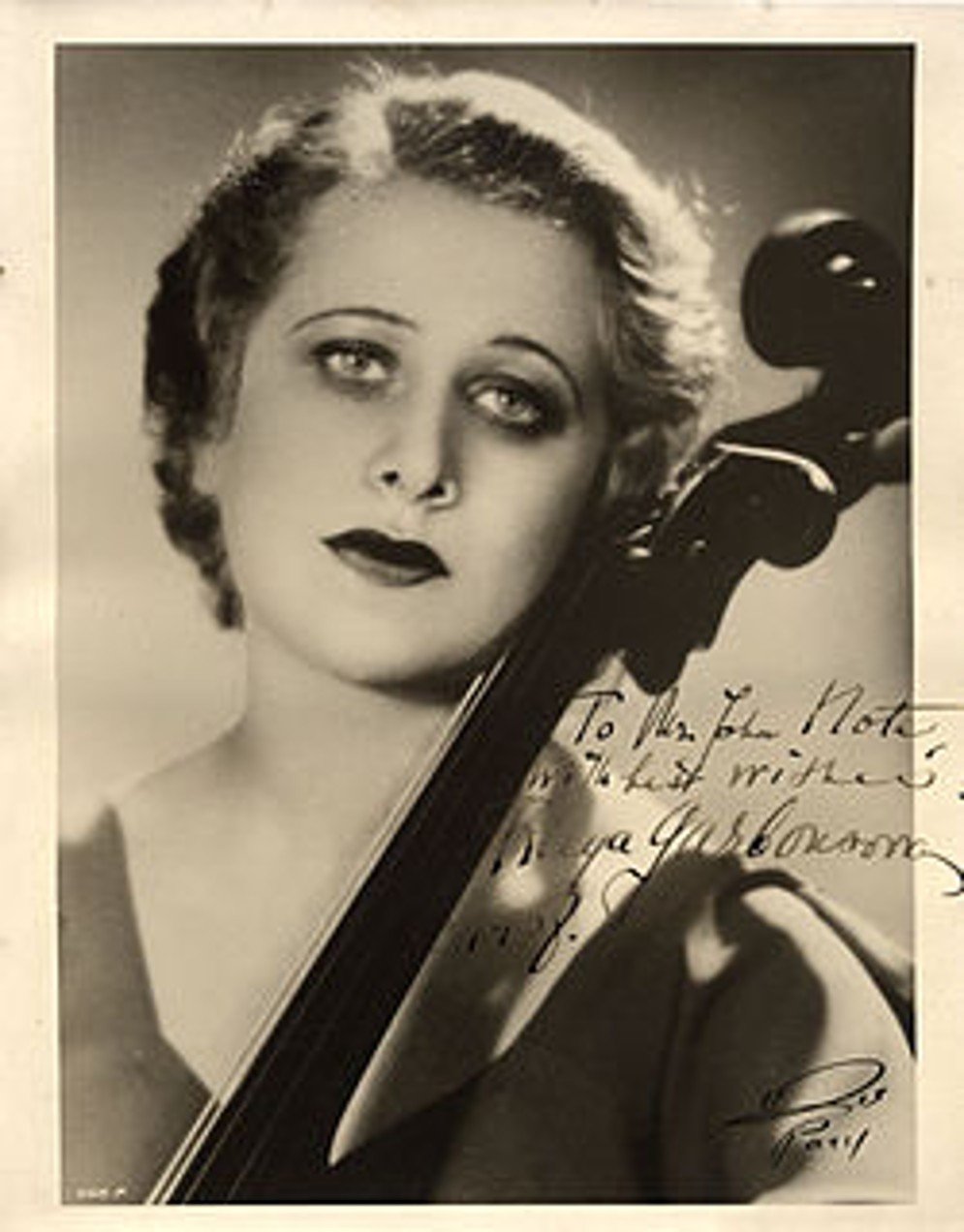
The great Russian cellist, Raya Garbousova, Jonathan Biss’s grandmother and part of his extended musical family (Photo source: Public domain, via Wikipedia.)
Both his parents are professional musicians and his mother, Miriam Fried, is considered one of today’s most accomplished and distinguished violin pedagogues. It would be fair to argue that many of her students treat her with worshipful (might one say, God-like) admiration and respect…and deservedly so. So far as I know, it has not done any of them any harm.
[i] Jonathan Biss, “Push Your Musical Gods Off Their Pedestals,” The New York Times, August 23, 2026.
[ii] Boris Goldovsky and Curtis Cate, My Road to Opera: The Recollections of Boris Goldovsky (Boston: Houghton Mifflin, 1979), pp. 72-73.
[iii] The issue is a little more complicated than has been described here. Great pedagogues rarely take on students who are not already far advanced which means the young people need prior teachers who are strong in developing students’ foundational skills. In my case, that teacher was John Krell, a member of the Philadelphia Orchestra. In my brother Andy’s case, it was Eleanor Sokoloff, another Curtis pianist. For my Uncle Boris, it was his uncle Pierre Luboshutz. And for Jonathan Biss, it was Evelyne Brancart, who was at one time Chair of the Piano Department at Indiana University.
Follow Tom on Instagram @thomaswolfauthor