Gregor Benko: The Musical Romantic (1944-2026)
By Thomas Wolf[i]
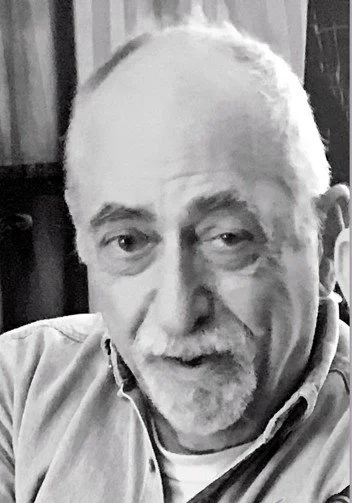
Gregor Benko (1944-2026). His achievements in the world of classical music were as extraordinary as they were unforeseen. (Photo source: Will Gray.)
IF YOU HAD BEEN PART of the graduating class at a certain high school in Cleveland in 1962 and someone asked you which one of your classmates would become a world-class authority in the world of classical music, Robert Benko’s name was one you certainly would not have mentioned. Robert Benko in 1962 had no family background in music; he did not play an instrument (family members had discouraged him from taking piano lessons); he did not attend classical music concerts; and his one musical ambition was to write a history of rock and roll.
A person at eighteen who displayed no aptitude for classical music and indeed no interest in it surely would not be a candidate to become a scholar, author, concert presenter, record producer, and one of the most important collectors of historic material in the field.
But the story of Gregor Benko, as he renamed himself some years later, is perhaps an illuminating example of how error-prone some of our stereotypes about classical music and those who excel in it can be.
Even today, just weeks after his death at the age of 82, Gregor Benko’s name is not familiar to most music lovers and is even unknown among some professionals who work in the field. He was not a famous performer; he did not have an academic pedigree (in fact, he did not even have a college degree); he was not associated with some illustrious musical institution; his published works are few; and much of his most important work was behind the scenes—often assisting others whose names are more familiar.
The accomplishment for which Benko is probably best known was his founding of the International Piano Archives, now housed at the University of Maryland, a remarkable treasure trove of recordings, letters, scores, and other material focused especially on pianists active in what he considered music’s “golden age.” Having assembled a personal collection of remarkable scope, he and a colleague, Albert Petrak, created the archive in 1965, calling it the International Piano Library. (Later, when the organization was moved to New York City, it was renamed the International Piano Archives for legal reasons in order to maintain tax exempt status.)
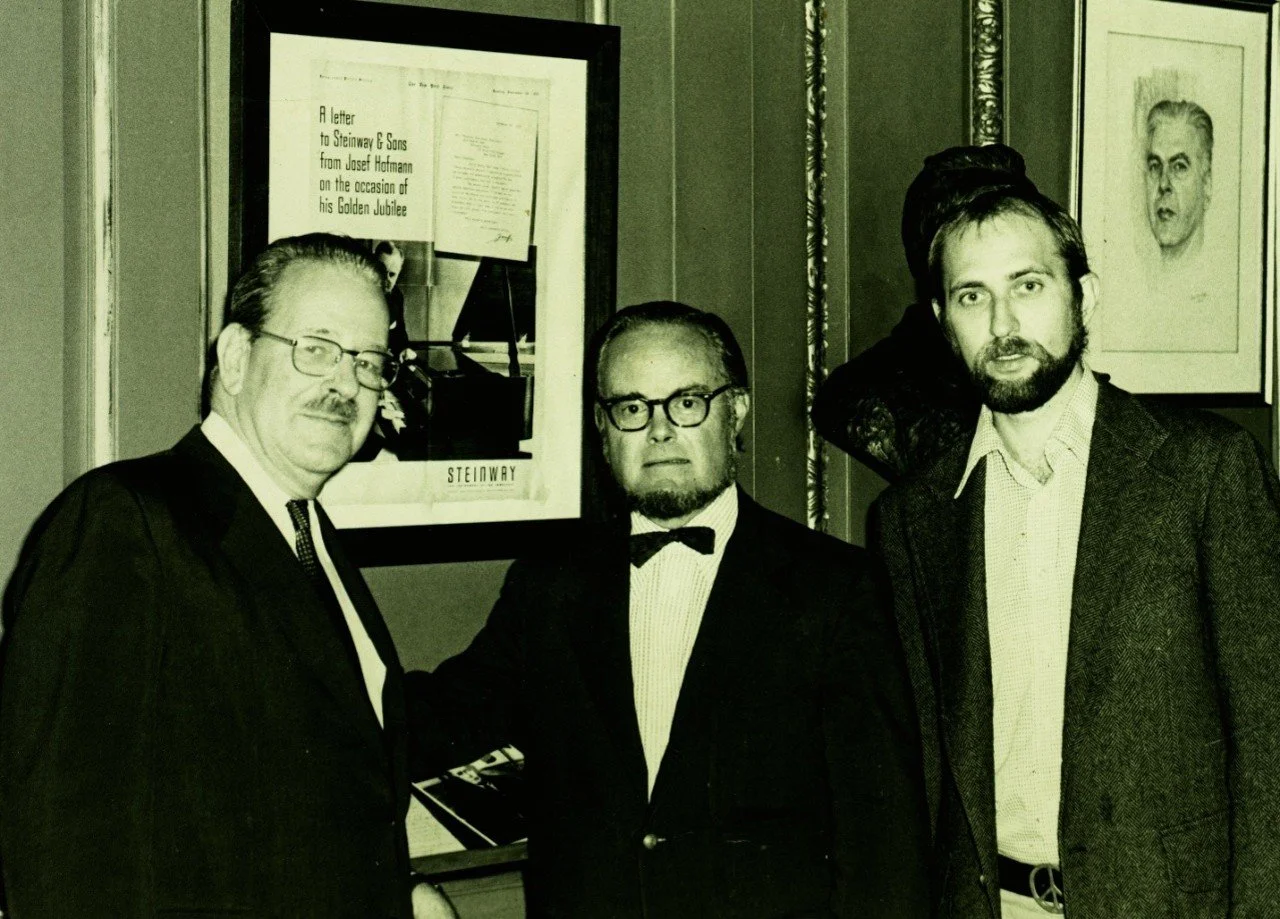
Gregor Benko (right) with John Steinway (left) and Anton Hofmann (center, and eldest son of pianist Josef Hofmann) at a New York exhibition at the Steinway company in 1976 commemorating the 100th anniversary of the pianist’s birth. As usual, Benko played a major role in the event. (Photo source: International Piano Archives at the University of Maryland.)
Over the years, Benko donated much of what he had collected to the organization with one categorical exception—material about his supreme idol, the pianist, Josef Hofmann. At the time of Benko’s death, he was working on the definitive biography of Hofmann, one of the greatest pianists of all time, and the screening of a Polish documentary film about Hofmann on which he had worked. Fortunately, these projects will be carried on by others, as will his last major record production for Marston Records, a ten-CD collection devoted to early 20th century Polish pianists.
The story of Benko’s conversion from a passion for rhythm-and-blues to an intense professional interest in historic performances of classical music (most especially pianists and vocalists) belies assumptions that only early exposure will make a classical music aficionado. Sometime after graduation, Benko heard a recording of the great Irish lyric tenor John McCormack and it changed his life. Though the recording was from the popular song repertoire, his curiosity was piqued. Benko was soon listening to operatic excerpts not only by McCormack but by the singer’s contemporaries, fostering a life-long interest in great singing and singers.
A tribute to Benko in Peter G. Davies’ classic book, The American Opera Singer, indicates just how extensive was his knowledge of that craft and how important he was to someone carrying out research in the world of opera singing.
Davies wrote: “At every stage in the preparation of this book Gregor Benko, co-founder of the International Piano Archives at the University of Maryland and an unfailing resource regarding musicians past and present, directed me to a wealth of material about the American singer. Biographical studies, articles, newspaper clippings, journals, collections of operatic memorabilia, pictorial material—Gregor seemed to know where everything could be located.”[ii] Many others, including me, could write something similar about our own research and writings.
Benko’s musical development was further enhanced by a friendship with a classical music radio host and regular attendance at concerts. (Cleveland was an ideal city to consume great music.) Later, The New York Times music critic, Harold C. Schonberg, and Frank Cooper, founder of the Festival of Neglected Romantic Music at Butler University, became mentors, then colleagues.
Over time, Benko developed very specific tastes and opinions… along with encyclopedic knowledge. He learned to read musical scores at a level where he could point out things that accomplished musicians had missed. He read voluminously—not only about music but great literature as well. And when it came to compositions, he became especially enamored of the Romantic era and performers who embraced it in a way that was true to its expressive possibilities.
Benko’s ultimate focus would be on performers who had been most active in the period that predated the technologically advanced era of recordings—to him, that represented classical music’s golden age. He believed that advanced recording technology had changed the trajectory of musical performance in a negative way. Once recorded performances could be diced and spliced to make them perfect and error-free, even live musical performances suffered the consequences. As he wrote to me only last year: “Musicians can’t take the kinds of risks they did in the old days. With recordings, everyone comes to expect a kind of standard performance with no mistakes and without exaggeration of expression. That limits the options.”[iii]
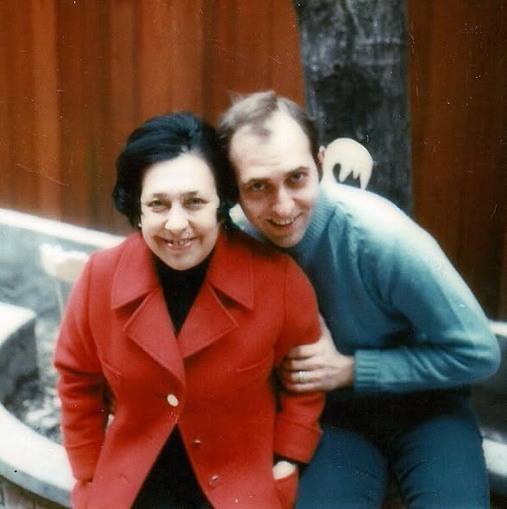
Benko with the International Piano Archives president, the distinguished Spanish pianist, Alicia de Larrocha. (Photo source: Collection of Gregor Benko.)
Once Benko’s life work was clear to him, ironically, recordings played a major role. One of his goals was to collect every recording by a pianist made before 1950, and according to one of his colleagues, the Rachmaninoff scholar Francis Crociata who knew him well, Benko was probably well over 90 percent successful in that effort by the time he died.
Benko’s first collection began with piano rolls—those continuous paper rolls with punched holes that stored musical data, many from great performers, that could be played on a special player piano. But in time, he decided that these did not offer the kind of fidelity to performance he was seeking. So though he had assembled a considerable collection of piano rolls, he abandoned this approach and began collecting early recordings as well as related material.
Eventually, Benko’s collection became part of the nonprofit organization that so many of us have relied on ever since. As but one personal example: when I was searching for a rare score of Mendelssohn’s Scherzo Brilliante arranged by my great uncle Pierre Luboshutz for two pianos, I could find it at the International Piano Archives. One of Benko’s early achievements that enhanced the organization’s reputation was to convince the distinguished Spanish pianist, Alicia de Larrocha, to serve as its president.
I first heard about Gregor Benko when I was conducting research for a book and needed some information about Josef Hofmann. I learned later that I should have known about Benko as he had interviewed members of my family years before for his project about the great pianist. Benko knew much of what I knew—that Hofmann had given concerts with my grandmother, violinist Lea Luboshutz, that he had been her boss at the Curtis Institute of Music, that he had played at my parent’s wedding, and that there were rumors that Hofmann and my grandmother had been lovers.
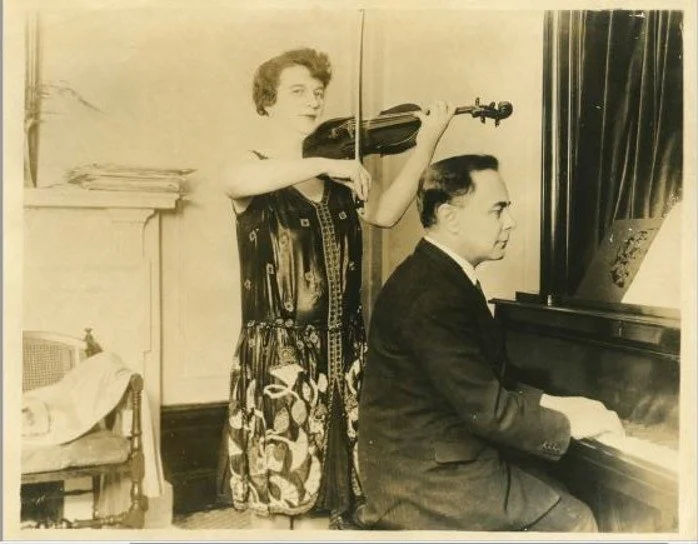
My grandmother, Lea Luboshutz, with the pianist Josef Hofmann (circa 1928). It turned out that I had a fair amount of information that I could share with Benko about Hofmann for a biography of the pianist. But most of the help and information sharing went the other way from Benko to me. (Photo source: courtesy Luboshutz-Goldovsky-Wolf archive, Curtis Institute of Music.)
What I knew and Benko did not was that it was Hofmann who had put the kibosh on my uncle Boris Goldovsky’s career as a piano soloist. Despite Boris’s studies with two great pedagogues—Artur Schnabel and Ernst von Dohnanyi, despite his having soloed with the Berlin Philharmonic as a fourteen-year-old, and despite the fact that he had appeared with my grandmother in Carnegie Hall, Hofmann refused to teach Boris, saying he would never be a soloist. This no doubt partially explained Boris’s negative comments about Hofmann in his autobiography[iv]—comments for which Benko never forgave him. With all this confusing family information combined with the rumor mill, I wanted to consult the expert.
Before our first interaction, I was told to approach Benko with caution—he might be reluctant to talk with me or share information. Later I learned that his caution was based on a bad experience he had had when a so-called scholar had abused his trust with research materials and plagiarized written material. But with me, Benko did not hold back. Like for so many others, his help on that occasion of our first meeting went so far beyond what I had expected that I soon sought him out regularly as an advisor, editor, and, when necessary, researcher, combing his vast networks for information that I needed (and sometimes didn’t even realize I required). It was he who located a rare recording of my grandmother from 1909, as well as letters, photographs, and other material.
He never asked for compensation or anything in return and I soon learned there were many others like me who relied on him. His regular emails, often sent at 5:30 a.m. (or earlier as he needed very little sleep), were often very lengthy, studded with information and strong opinions—but always generous to a fault and I soon learned that his correspondence with me was among many emails composed in the wee hours. Though occasionally I was able to share information of value to him, mostly the advice and help went the other way and clearly sharing what he knew gave him great pleasure.
Benko was quick to make introductions and I found his network was world-wide. When I commented about how sad it was that the many recordings of my great aunt and uncle, the duo-piano team of Luboshutz & Nemenoff, had never been remastered and reissued, he put me in touch with Ward Marston of Marston Records. Benko had worked closely with Ward on many projects and there was the massive one (already mentioned) in the pipeline at the time of his death. The result in my case was a four-CD set of beautifully remastered Luboshutz & Nemenoff material—much of which I had not known about. Benko offered to listen, to comment, to suggest choices when there was more than one version of similar material, and ultimately to make a generous addition to the liner notes.
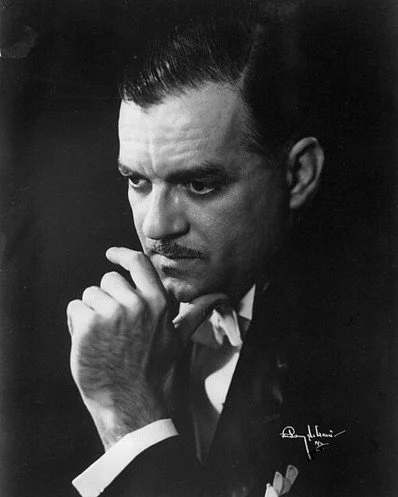
Pianist Jorge Bolet in 1975. It was Gregor Benko who helped launch his career. (Photo source: Wikimedia Commons.)
One of Benko’s proudest achievements was his role in furthering the career of the Cuban-born American pianist, Jorge Bolet. Bolet’s playing, in Benko’s view, exemplified the best of piano’s golden period, yet his career had been limited to concerts in small communities and he had been forced to tow his piano in a trailer behind his car as he traveled from town to town. When Benko organized a major high-profile New York concert to benefit the then-Library in October of 1970 featuring eight leading pianists of the day, Bolet was among them. Not only did the pianist make a huge impression on the audience with his performance of Franz Liszt’s Paraphrase on Verdi’s Rigoletto (an immensely challenging piece for the pianist and one exemplifying the height of Romanticism), but Harold Schonberg’s ecstatic review in The New York Times launched Bolet into a big-time career. Once again, it was one of those events for which history will not give Benko the credit he is due.
Gregor Benko and I agreed about most things, but about one big topic, we did not see eye-to-eye. He despaired for the future of classical music and could cite all the indicators that convinced him that the glory days of the field were forever behind us. I was more optimistic and still believe that though changes are and will inevitably be afoot, I can be bullish about the field’s future. We had been preparing to meet this coming fall in New York and I wanted to have it out with him—advancing all the reasons why I thought he should be more optimistic.
Of all the regrets associated with his untimely and unexpected death and the many conversations we will never have, this one looms large.
[i] I am immensely grateful to Francis Crociata and Peter Greenleaf for their assistance on this blog.
[ii] Davies, Peter G., The American Opera Singer: The lives & adventures of America's great singers in opera & concert from 1825 to the present, New York: Knopf Doubleday Publishing Group, 1999.
[iii] Quoted in Wolf, Thomas, Bravo Encore! Peter E. Randall Publishers, forthcoming (1987), p. 170.
[iv] Goldovsky, Boris and Curtis Cate, My Road to Opera: The Recollections of Boris Goldovsky, Boston: Houghton Mifflin Company, 1979.
Follow Tom on Instagram @thomaswolfauthor