Want to Sell Your Book, Painting, or Recording? Here’s How.
By Thomas Wolf
LET’S IMAGINE YOU HAVE JUST PUBLISHED A BOOK and you are hopeful that many people will purchase and read it. Which of these is likely to have the greatest impact on sales?
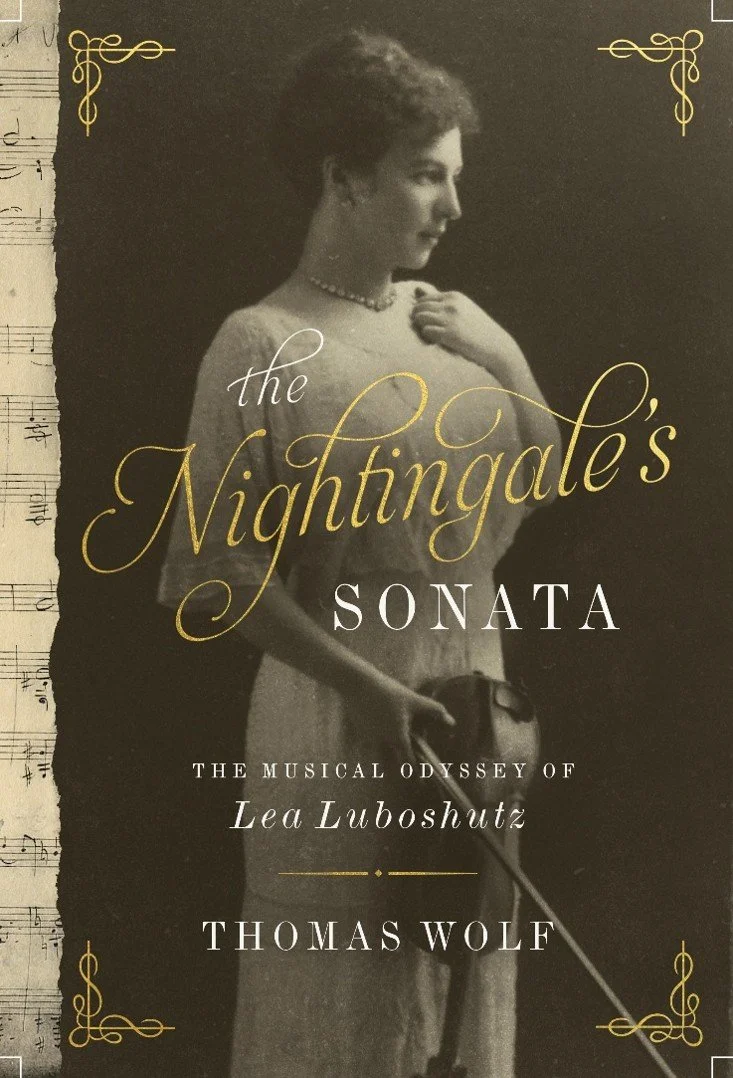
When none of the conventional ways of marketing my book worked, I was surprised at one that did have a positive impact on sales.
A positive review in a major international publication
Winning a national award
A mini-tour of bookstores and book clubs
Hiring a marketing consultant to assist with sales
An Instagram reel of a cat reading your book
While the question is theoretical and may have dissimilar answers for different authors, let me share my own experience.
My book, The Nightingale’s Sonata, was published in 2019. [1] It was positively reviewed in the Wall Street Journal, among other publications. These reviews did not have a discernable impact on sales.
Later the book won a national award—the Sophie Brody Medal, honoring the best book representing Jewish literary arts for the year. While this was clearly not a household-name award, I still believed that the large pool of Jewish readers, many organized into Jewish book clubs, would purchase my book. Again, no discernable impact.
Readings in bookstores sold a few copies but most of those who attended were people who knew me and would have bought my book anyway. Book club discussions sold some books but the sales were not substantial.
I had engaged a marketing consultant for a few months, and while she was able to generate more reviews and media appearances, the effort did not seem to produce dramatic sales results.
Sometime later, I developed some Instagram reels. True, there wasn’t one of a cat reading my book, but these videos, often less than a minute in length, did mention either my book, my web site, or my blogs (or sometimes all three). The whole idea of setting up an Instagram account had been something of a lark. I had been urged to do so by my sister (an actress for whom Instagram had helped with agents and casting directors). My grandchildren, too, had said I should get with the times, but I did not expect much. Imagine my surprise within a short time of developing content for Instagram, that the needle on my blog readership and book sales jumped.
Assessing Value
What was going on here? Why were the traditional gate-keepers and outlets for content creators like me so unreliable, while tiny videos on social media lasting about a minute had greater impact? I confess that I was stumped until I read an insightful piece by Douglas McLennan entitled “Lessons about Value and AI from the Digital Revolution.” In the old days, he explained, “for better or worse, we had built a complex and multi-layered system to support the making of culture. Curators and publishers and funders and agents sifted and made choices. Cultural institutions and studios and presenters nurtured and championed. Critics and historians and the box office argued for what matters.”
It was a system that had its origins in the nineteenth century, as Orlando Figes describes in his book, The Europeans: Three Lives and the Making of a Cosmopolitan Culture. [2] Many things contributed—an emerging middle class of cultural consumers growing in number and geography, the rise of professional criticism in an expanding media world, more sophisticated marketing, even technological developments like railroads. The system’s ubiquity—its claim on determining quality and value—made it seem permanent by the second half of the twentieth century.
The internet changed all that. Instead of attempting to determine intrinsic value, big tech companies, interested in their bottom lines, “relocated value to something much easier to manufacture, the attention that culture attracted rather than the thing itself.” It didn’t matter whether something was good or bad, what mattered was how many clicks it received on the internet. According to McLellan, “Culture… is expensive to make and measure—to make and shape a thing itself and to convince consumers they should pay for a ticket or a subscription or a recording. Clicking and liking, on the other hand is really cheap, the investment of a second or two. Don’t like it, and you’re on to the next thing. And it’s incredibly easy to scale to astonishing numbers no traditional culture could match.”
And so, a whole new system grew up and with it a new lexicon: “the attention economy,” “content creators,” “eyeballs,” “clicks,” “scaling,” “algorithmic counts.” If a cat video received more clicks than a Beethoven symphony, then that video was worth more to a tech company and an algorithm promoted it. This wasn’t a value judgment in the traditional sense—it wasn’t about intrinsic quality. Again, according to McLennan—"it’s an architecture, and once it was in place, the argument about what artists get seen and get paid became arguments the platforms refereed.”

Speaking of a cat reading a book—one of the marketing strategies mentioned at the beginning of this blog—here is a cute AI rendering. It wouldn’t take long to substitute an image of my book to replace the one here, using AI of course. (Photo source: freepik.com.)
Here Comes Artificial Intelligence—Watch Out!
Subsequently, content creators faced a new challenge: artificial intelligence (AI). AI is producing content at an extraordinary rate in competition with the work of actual people.
The music streaming platform Deezer says 90,000 AI tracks are uploaded to its platform every day, more than what human artists upload. Is it any good? An irrelevant question. If it gets the clicks, it gets passed on. Thus, “findability” has become a key issue for those of us who create books and music and visual art. It boggles the mind what we are up against and it is profoundly discouraging to “content” creators (if that is now what we are to call ourselves).
All this begs the question, what can we do to garner attention—and who is responsible?
Initially, I thought there was a simple answer to this question of how to garner attention in the case of my books, or at least who would be responsible. I assumed that marketing and selling my books was the publishers’ problem, not mine. Mine was simply to write the books in the first place and deposit my royalties if and when they came in. But that was naïve. Indeed, a question I received from the publisher of The Nightingale’s Sonata before receiving my contract was revealing: “What will you do to promote and sell your book?” Apparently, it was my job at least as much as the publisher’s, to sell the book—and, as it turned out, more mine than hers.
Another Challenge—Remaindering and Keeping a Book in Print
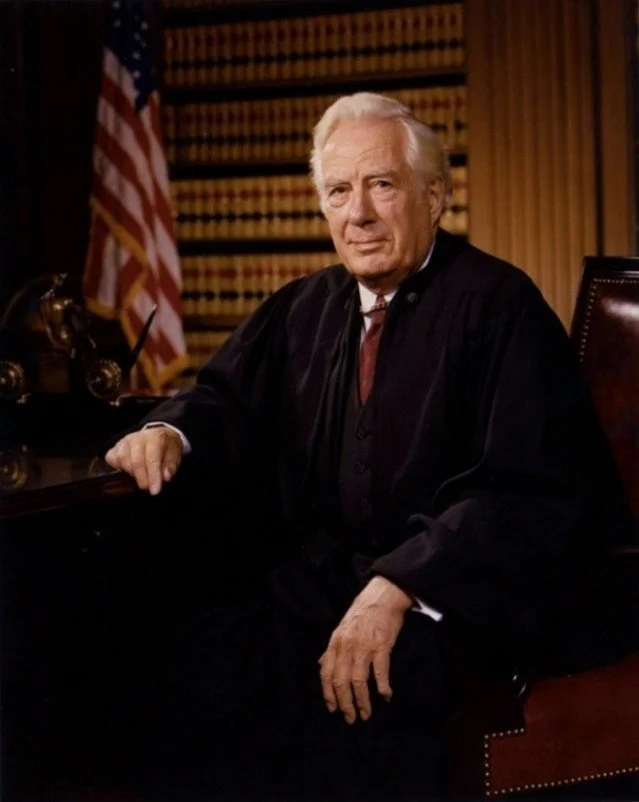
Warren Burger, Chief Justice of the US Supreme Court in 1979, the year the court handed down a decision that had a profound effect on book publishers. (Photo source: U.S. Supreme Court photographer, Public domain, via Wikimedia Commons.)
Gaining enough attention to get people to purchase a new book is certainly an immense challenge. Another is keeping a book in print long enough to build up sales numbers. At one time, publishers’ back lists (books that are no longer current but are still available at the original price) were a valuable resource for them and for their authors. A trickle of sales over a number of years could eventually make a book profitable.
All that changed with a Supreme Court decision in 1979 known as Thor Power Tool Co. v. Commissioner. Though not a case about book publishing per se, it had a major impact on publishers’ business model.
The effect of the decision was that it eliminated the possibility of “writing down” the value of publishers’ inventory for tax purposes unless books were either sold or scrapped. Books on back lists had to be valued at their original cost of production, thereby inflating their taxable value. In order to avoid paying taxes on books that might never sell, publishers resorted to the practice of “remaindering” their inventory—that is, selling it off at hugely discounted prices, thereby deriving some income and being taxed at a much lower rate. Alternatively, they simply destroyed whatever books they had left. [3]
Today, many commercial publishers’ business model favors focusing on books that can bring in revenue quickly and then remaindering the extra inventory when sales slip. For those of us whose books sell more slowly, an additional challenge we face is to convince our publishers to maintain inventory by promoting sales over time. One of my books—Managing a Nonprofit Organization—is both a textbook and a book about management—two categories that derive continued sales. With this book, I have been lucky. It has been in print through several editions over four decades and has sold over 100,000 copies. [4]
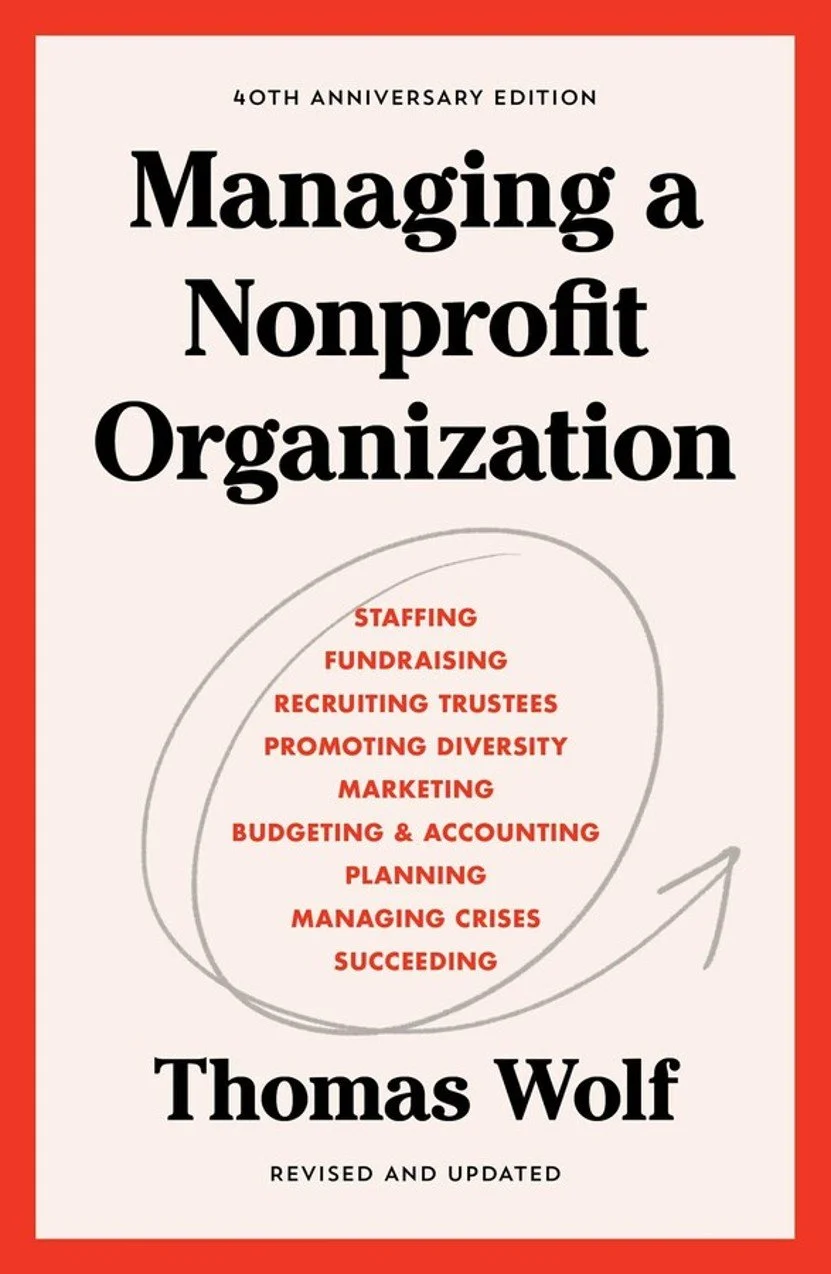
My book, Managing a Nonprofit Organization, has been in print for forty years. But textbooks like this one, especially in a popular subject area like management, have a much longer sales life than books about classical music and musicians, the type of book I have been writing more recently.
But a family history about classical music like The Nightingale’s Sonata is not going to be a popular seller. Indeed, I was lucky to find a publisher for the book in the first place. Encouraging a steady stream of sales after the initial year or two thus became a priority for me.
My strategy for that book has been to take seriously the admonition that it is up to me to make sure the book sells and to develop a long-term strategy to do so in order to keep it from being remaindered. Among other strategies, I have arranged and sold concert-lectures with live music, historical photographs, and narration based on the book’s subject matter. (View a sample video.)
The key sales strategy in connection with these performances is that the presenter must agree to purchase a minimum number of copies of the book (my minimum number is 50 books) to distribute or resell to audience members. In the case of The Nightingale’s Sonata, the strategy has worked so far in keeping sales going. Published in 2019, it has not been remaindered and I am continuing to sell these types of events through the end of 2027. But for many of my other books where I do not have this happy option, I have resorted to making bulk purchases of my own book periodically at a discounted author’s rate and making these available as a contribution to worthy organizations like schools or nonprofit organizations. Determined to keep these books in print because it is only over time that they will be successful sellers, I have resorted to becoming a buyer as well as a seller.
University Press and Academic Books
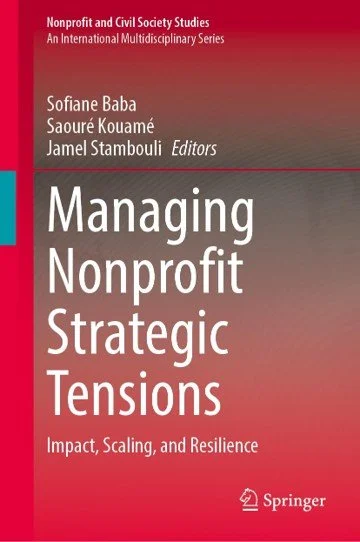
A forthcoming academic book for which I have written a chapter. These books tend to be very expensive (this one will cost more than $175) and they take a long time to be published between conception and sales. [6]
There is one category of publisher that is not subject to federal inventory taxes—university presses [5]—and it is true that such presses tend to keep back-listed titles longer than commercial publishers. But dealing with university presses and other kinds of academic publishers has its own set of challenges.
Most university presses have stringent requirements about the academic rigor of their publications and thus manuscripts are subject to several rounds of outside reviews. The time between a book’s conception and publication may be many years. In my own case, I was commissioned to write chapters for two academic press books some years ago and neither has completed its way into print as yet, though both are still on track to be published. Much of the timeliness of the material I developed has gotten lost as things have taken so long and my control of the content has been subjected to comments and suggestions with which I disagree but which require me to make substantive revision.
In addition, many of these books have limited appeal to a broad readership and are very expensive to purchase. For writers like me, they do not represent more than an occasional opportunity to reach an academic audience.
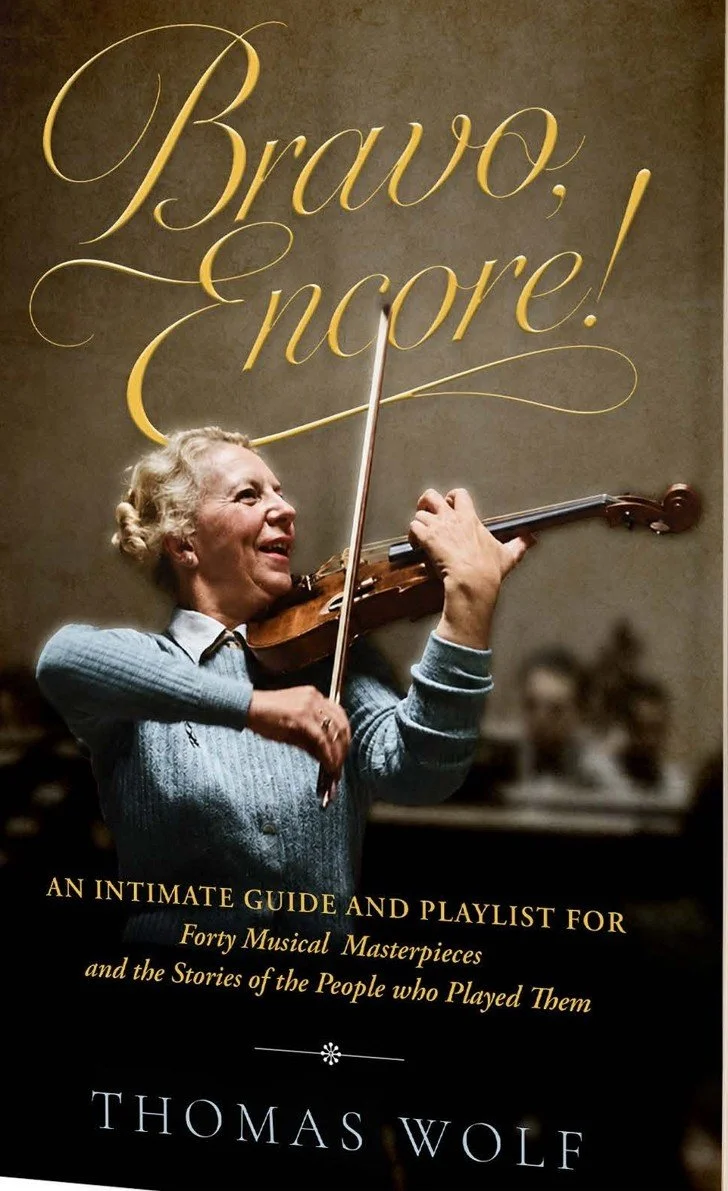
The cover of my forthcoming book, due out in April 2027, for which I am trying a different approach to content, publication, marketing, and sales.
Future Publications
So, what is to be done? I am not sure any creator has a full-proof answer, but I am determined to continue to experiment as far as my books (and even some family recordings) are concerned. For my next book, entitled Bravo, Encore!, I have decided to try some new approaches to content and publication.
Bravo, Encore! is a series of forty stories and vignettes about famous musicians, each of which is associated with a piece of music (an encore). As a content innovation, the book will include links and QR codes directing readers to actual performances of these pieces on platforms like YouTube and Spotify. Some of these are family recordings made long ago (one, by my grandmother, the concert violinist Lea Luboshutz, dates back to 1909). I have put these on YouTube, thereby generating clicks not only for the book but for these long forgotten musical performances. Such strategies are my modest 21st century attempt to utilize the power of the Internet in my favor for a change.
The book’s marketing approach feeds directly into the strategy described earlier—realizing sales through concert-lecture performances that come with a guaranteed pre-sale. I have field-tested new programs based on the book’s subject matter in front of actual audiences. (View a sample video.)
I will certainly utilize the internet and social media for marketing purposes—indeed, my web site and Instagram material is already featuring the book and encouraging pre-publication sales regularly, even though the publication date is April 2027. [7]
But another substantive change, for me at least, is how I will handle publication and distribution. I have opted to bypass a conventional agreement with a publisher and instead, will take on more risk in exchange for more control. The publisher will assume production details as usual and will assume initial marketing responsibilities. But the upfront costs (including a separate contract with a distributor working closely with the publisher and some storage costs), as well as the downstream revenue, will be mine. Books will be available for as long as I wish (including the option for reprints if I so choose). Will it work? Perhaps a wise AI-produced cat pictured reading this new book will be the only one who knows for sure.
[1] For more about The Nightingale’s Sonata book, visit my website.
[2] See Orlando Figes, The Europeans: Three Lives and the Making of a Cosmopolitan Culture, Metropolitan Books, Henry Holt and Company, New York, 2019.
[3] When Houghton Mifflin decided to remainder my uncle Boris Goldovsky’s hardcover autobiography, My Road to Opera, for $1/copy, Boris purchased the entire remaining inventory and had staff members sell the books to audience members before performances of his opera company, earning a tidy profit. The last time I saw an out-of-print copy of the book listed on Amazon, the price was $101.91. On the other hand, Ebay offered second-hand copies for as little as $7.90, with a signed copy going for $17.97.
[4] For more about the latest edition of Managing a Nonprofit Organization, go to the book’s webpage at Simon & Schuster.
[5] In some states, university presses may be subject to state inventory taxes.
[6] For more about this book, go to the book overview page at Springer.
[7] For more about Bravo, Encore!, visit the book’s webpage. The book will not be available for five months, but already my own marketing efforts have begun as well as the publisher’s.